
Speak up on Illinois' CO₂ pipeline rules — September 17
Virtual public hearing · Thursday, September 17, 1:00–4:00 p.m.
Illinois Commerce Commission, Docket No. 26-0427
Join the hearing here:
https://illinois.webex.com/meet/leslie.haynes
Access code: 804 305 489
We asked for this hearing. Over 400 people signed on to request it — Illinois law requires 25 — and the pipeline industry opposed it. The Commission granted it. Now we need people to show up.
Here's why it matters.
Modeling has to answer the questions that keep people alive
The rules will decide what a pipeline company must model before a route is approved. Right now, that modeling doesn't have to tell anyone the things that determine whether a person survives an accidental release:
- How concentrated the CO₂ becomes, in parts per million
- How long people are exposed at each level
- How far the plume travels from the rupture
- How fast it gets there — and how much time anyone has to react
Without those four numbers, no one — not a county emergency manager, not a fire chief, not a family living 300 feet from the right-of-way — can assess the actual risk. We're asking that modeling results be reported at 5,000 ppm intervals, including the model's highest predicted exposures.
Because the health effects depend entirely on those numbers
CO₂ is not benign. It is heavier than air, so it pools in low ground, ditches, and basements, and it displaces oxygen. Ordinary outdoor air is about 420 ppm. At 30,000 ppm people experience headache, dizziness, and labored breathing. At 40,000 ppm — NIOSH's threshold for "immediately dangerous to life or health" — exposure can cause irreversible harm. Above roughly 70,000 to 100,000 ppm, unconsciousness comes within minutes, followed by convulsions and death.
Duration matters as much as concentration. A concentration that is survivable for two minutes may not be survivable for twenty.
Because rescue is the whole question
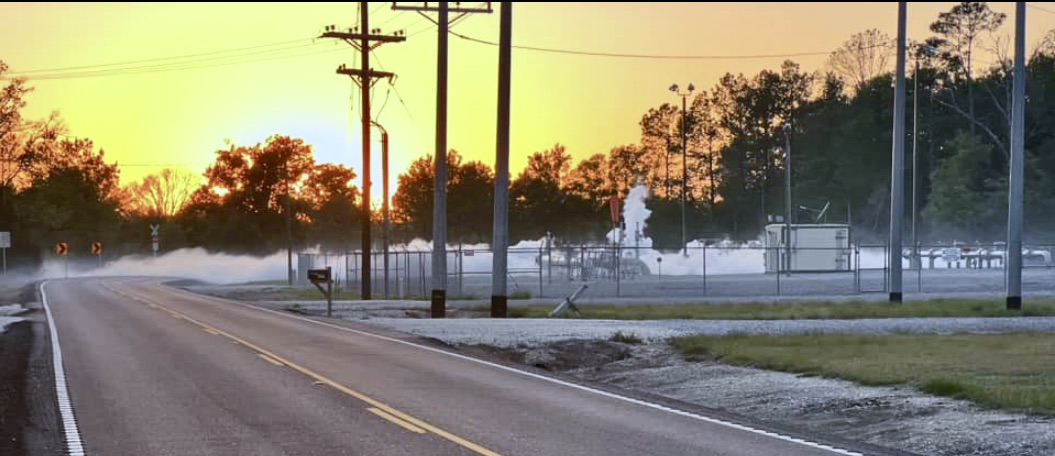
When a CO₂ pipeline ruptured near Satartia, Mississippi in February 2020, 45 people were hospitalized and about 200 were evacuated. Vehicles wouldn't start — combustion engines need oxygen, and there wasn't enough. People couldn't drive away, and first responders arriving without breathing apparatus couldn't get to them.
That is the scenario the modeling has to be able to predict. If a risk assessment shows that people in a given place cannot be reached in time, that is not a detail to be managed later. It's the finding that should decide the route.
Because environmental justice communities carry this first
Communities already burdened by industrial pollution are frequently the ones a pipeline route crosses — and often the ones with the least emergency response capacity, the fewest evacuation options, and the highest baseline rates of respiratory and cardiac conditions that make CO₂ exposure more dangerous. If health impacts aren't modeled and disclosed, those residents can't see the risk being placed on them, let alone contest it.
Because first responders can't protect anyone without funding
The fee schedule as proposed does not appear adequate to equip and train the fire departments and EMS agencies who would respond to a release. Many of these are volunteer departments. They need CO₂-specific training, self-contained breathing apparatus, detection and alarm equipment, and clear jurisdictional lines about who leads a response that crosses county boundaries. Who pays for that, and how much, is a question this rulemaking has to answer.
And because the Commission has the authority to say no
This is the heart of it. When a risk assessment concludes that people along a proposed route cannot be rescued in time to avoid lasting injury or death, the Illinois Commerce Commission should deny the route. We're asking the Commission to write that authority plainly into these rules — including rejecting routes that would leave people at 30,000 ppm without guaranteed timely rescue, and routes that would expose anyone to 40,000 ppm.
What you can do
Attend on September 17, 1:00–4:00 p.m.
Participants may join the meeting by clicking this link:
https://illinois.webex.com/meet/leslie.haynes
Access code: 804 305 489
Or join by phone:
+1-312-535-8110 United States Toll (Chicago)
or +1-415-655-0002 US Toll
Speak. Each speaker will be given three to five minutes, depending on how many people sign up.
Sign up by emailing the Administrative Law Judge Queen Cunningham, no later than September 15, 5pm:
queen.v.cunningham@illinois.gov
Submit a written comment
https://icc.illinois.gov/docket/P2026-0427/public-comments
You do not need to be an expert. If you live near a proposed route, if you're a first responder, if you have a family member with a heart or lung condition — say so. Tell the Commission who is in the blast radius of a decision made in Springfield. That's what the record needs.
Questions? Contact us at prichart@ecojusticecollaborative.org